
Research Areas
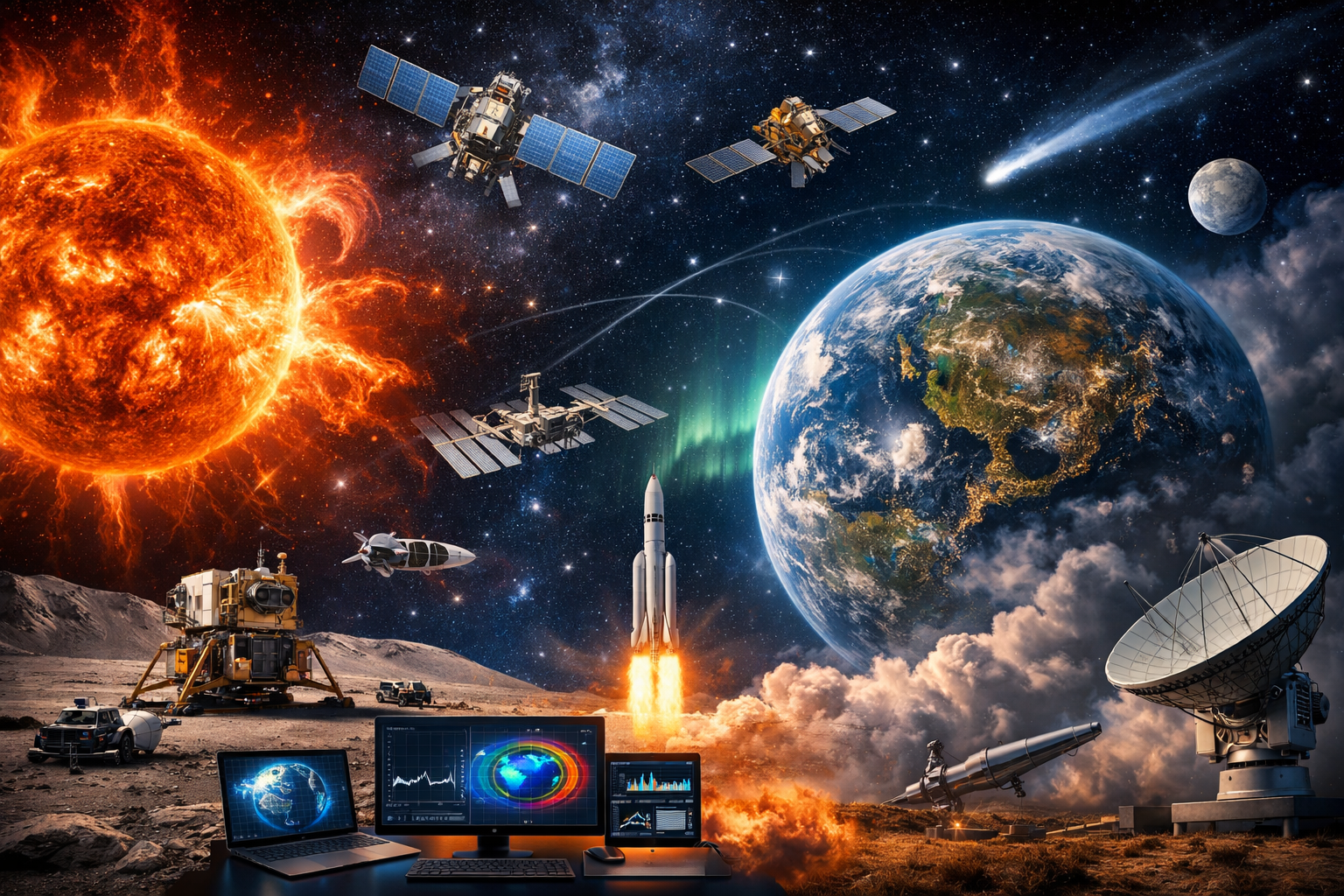
The research activities of Dr. Sharad Chandra Tripathi focus on ionospheric physics, solar-terrestrial interactions, plasma dynamics, and space weather phenomena. The work integrates observational data analysis, space science instrumentation, and computational physics methods to investigate how solar activity influences Earth's ionosphere and magnetosphere.
Research Highlights
Ionospheric Variability & Plasma Dynamics
Studies on ionospheric responses to geomagnetic storms including plasma irregularities, Total Electron Content (TEC) variations, and radio wave propagation.
Solar Flare & Space Weather Impacts
Analysis of solar flare events and solar transients on ionospheric structure and communication systems.
Solar Plasma Diagnostics
Observational diagnostics of solar flares, filaments, and surge phenomena for understanding plasma heating mechanisms.
Global Geomagnetic & Ionospheric Effects
Assessment of geomagnetic storms and solar wind impacts on the Earth's ionosphere under solar cycle variations.
Recent Publications
- Loading publications...
Research Profiles


🛰️ Space Science Laboratory, VIT Bhopal University
GNSS/NavIC Research Facility
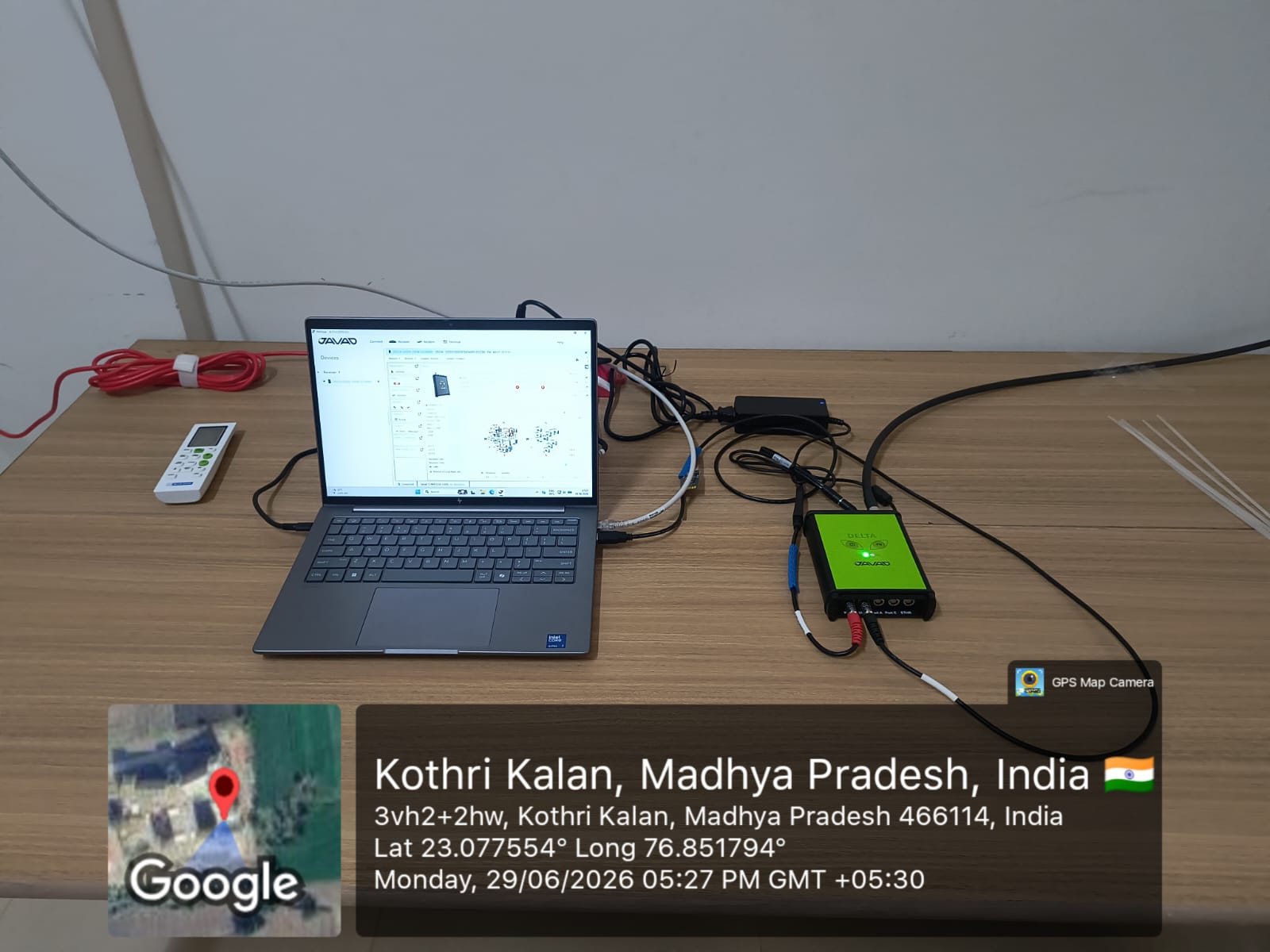
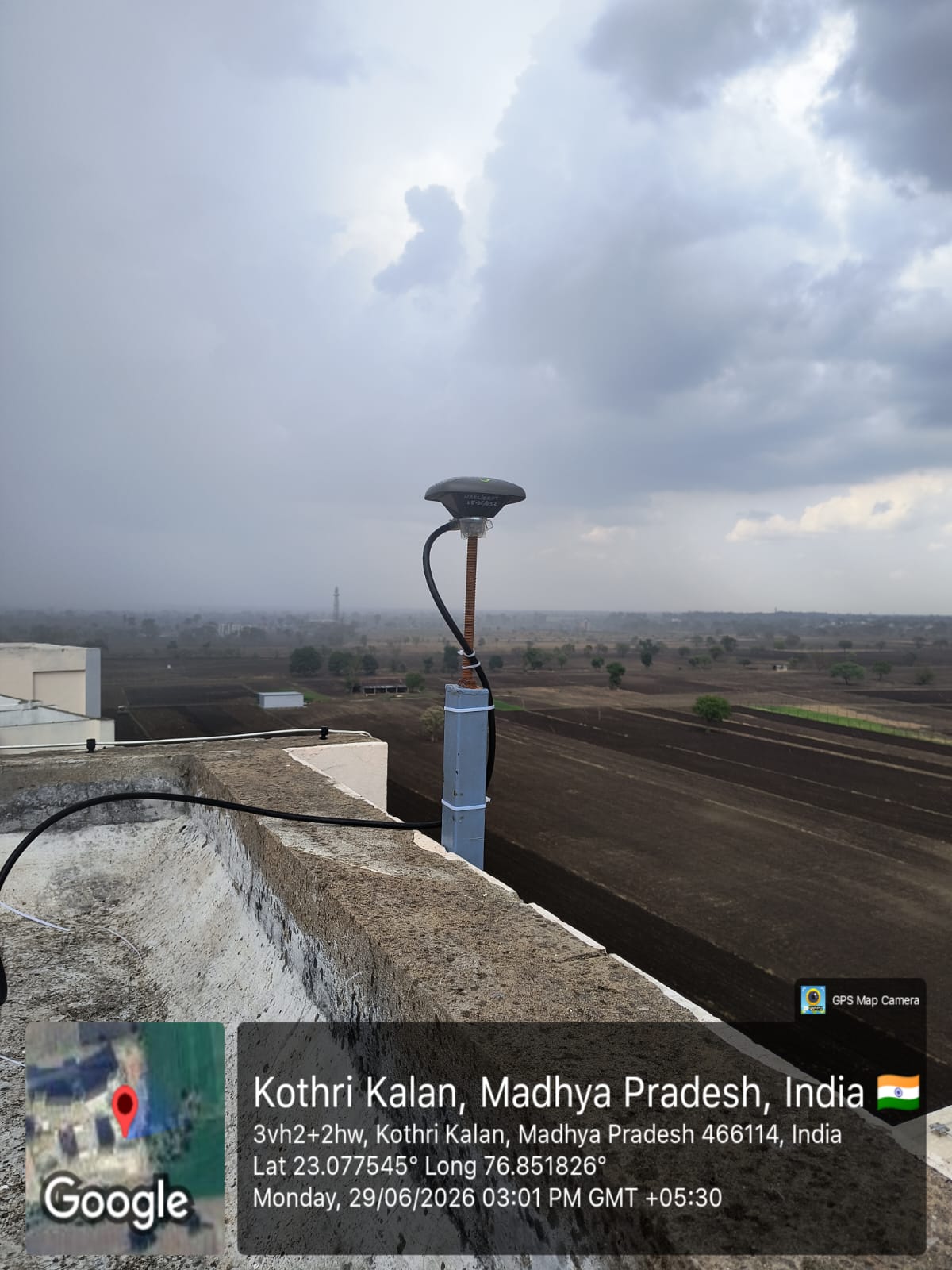
The Space Science Laboratory at VIT Bhopal University hosts an advanced GNSS/NavIC Research Facility established with the support of the National Atmospheric Research Laboratory (NARL), Department of Space, Government of India. The facility is an important node in the Network of GNSS/NavIC Receivers for Ionosphere and Space Weather Observations (North–South Chain), contributing to national efforts in ionospheric monitoring and space weather research.
Equipped with a state-of-the-art GNSS/NavIC receiver featuring specialized scintillation monitoring capabilities, the laboratory provides continuous real-time observations of ionospheric conditions. The facility supports research in ionospheric physics, satellite navigation, plasma dynamics, and space weather while providing students and researchers with access to high-quality scientific data.
Research Infrastructure
The laboratory is equipped with a state-of-the-art GNSS/NavIC receiver featuring specialized ionospheric scintillation monitoring capabilities. The system provides continuous real-time observations of ionospheric conditions for satellite navigation and space weather studies.
Ionospheric Monitoring
Research includes monitoring Total Electron Content (TEC), ionospheric scintillation, signal degradation, and GNSS loss-of-lock events to understand ionospheric variability and its effects on communication and navigation systems.
Space Weather & Navigation
The facility supports investigations of travelling ionospheric disturbances, solar flares, geomagnetic storms, geodesy, Positioning, Navigation and Timing (PNT), and indigenous NavIC applications.
National Collaboration
The GNSS/NavIC facility represents a long-term collaboration between VIT Bhopal University and NARL. Joint research and publications contribute to India's capabilities in satellite navigation, Earth observation, and space science while providing valuable research opportunities for students and young researchers.
Collaboration Opportunities: Faculty members, researchers, and students interested in collaborative research, internships, or project work utilizing the GNSS/NavIC facility are encouraged to contact the Space Science Laboratory.